Peatlands cover more than 10% of Minnesota—the most of all the lower 48 states. Formed through centuries of accumulated organic matter, peatlands sequester around a third of the world’s soil carbon, though they make up only about three percent of the earth’s surface. Higher temperatures and drier conditions resulting from climate change threaten to disrupt this balance: the deep peat beds may begin to decompose, releasing centuries of stored carbon.
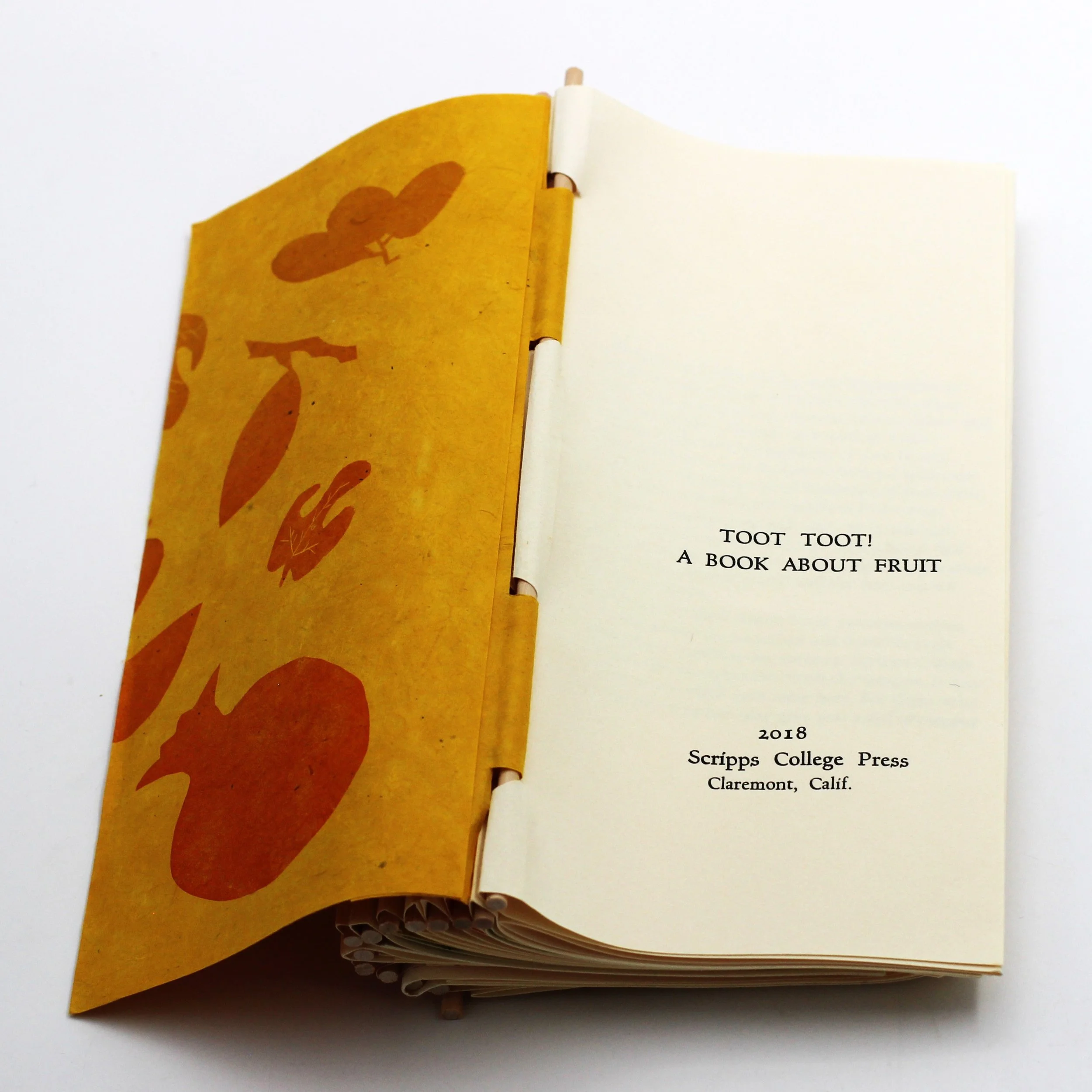
For this project, artist Leah Willemin worked with the SPRUCE experiment in Northern Minnesota. There, scientists investigate the effects of climate change on peatlands by raising temperatures and CO2 levels within enclosed areas of a bog. These enclosures represent potential futures: How might mosses, trees, bushes, fungi, and lichen all respond to higher temperatures? How will their relationships change? As my book unfolds, it depicts shifting arrangements and connections between members of the peatland ecosystem. Fully unfolded, the book takes the shape of the hexagonal enclosures at SPRUCE.
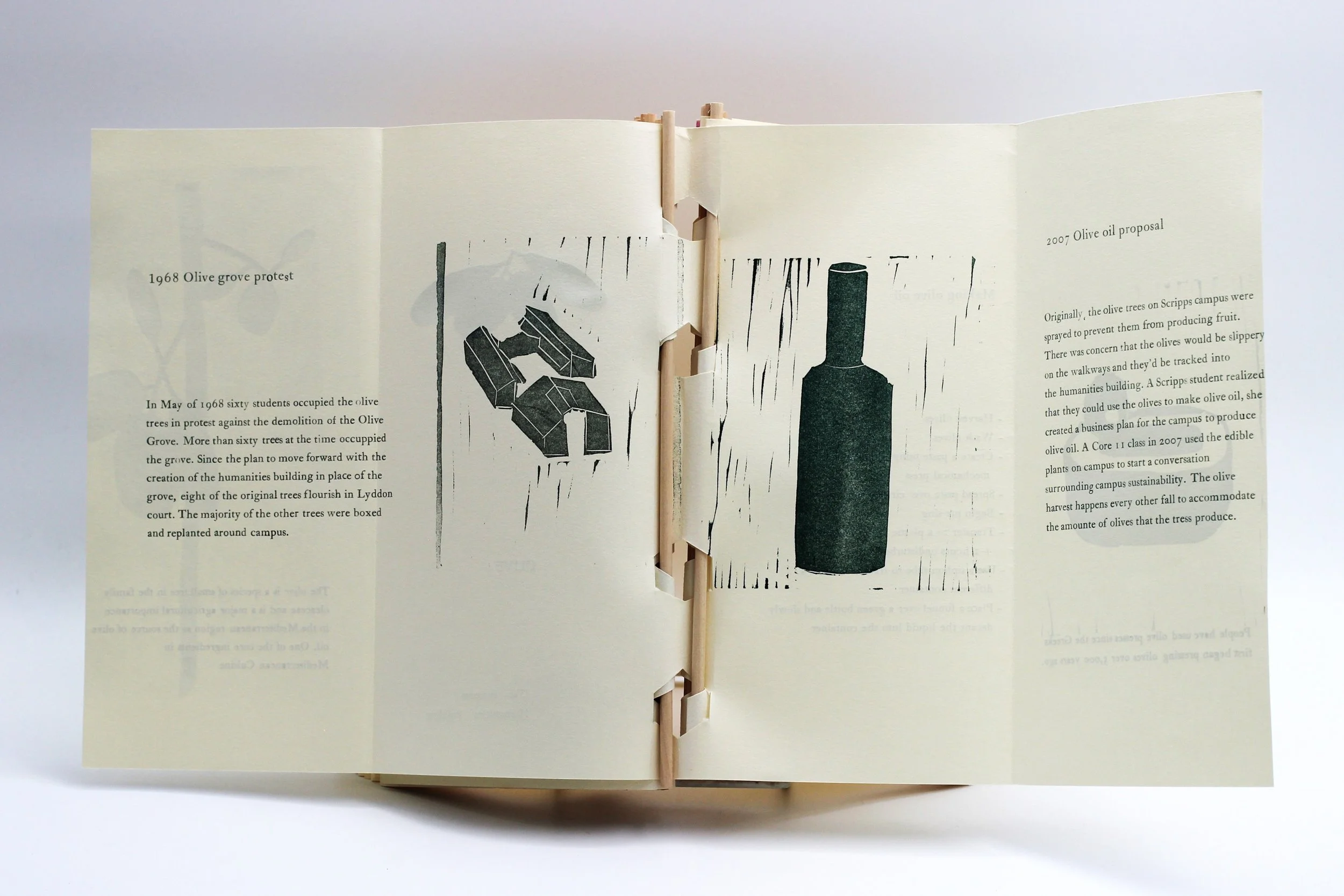
This work contemplates what it means to know a place and an ecosystem—into the future, or into the depth of the soil, or through slow observation and care. Each set of images in the book represents a way of sensing the peatland, drawing on research data generated at SPRUCE. Using LIDAR scan data, I created 3D paper sheets representing the bog surface. Some images are from below-ground robotic scans of tiny root systems and mycorrhizal fungal networks, and others from webcam shots of the bog. Willemin observed the bog through these programmatic captures before visiting to create a set of in-person sketches, which reflect her own sensing and movement through the site.
The 3D form of this book mimics the depth of a bog and invites the viewer to consider what is not seen, or what is hidden within. In a literal sense, the depth of water and peat that store carbon in a bog are not visible from the surface, but wetlands themselves are also often overlooked and poorly understood. The complex life they support is not always flashy, but instead demands quiet and close attention.
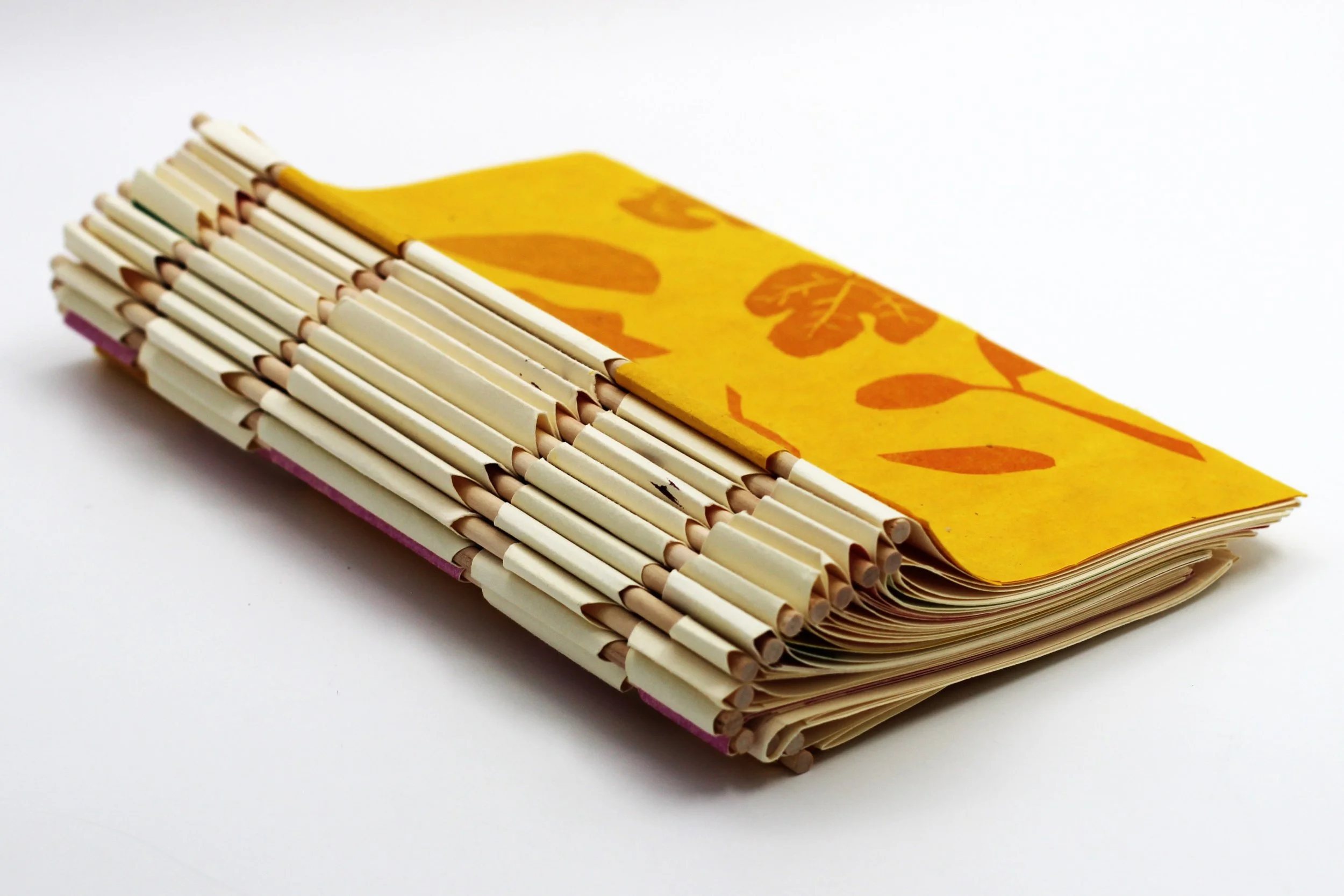
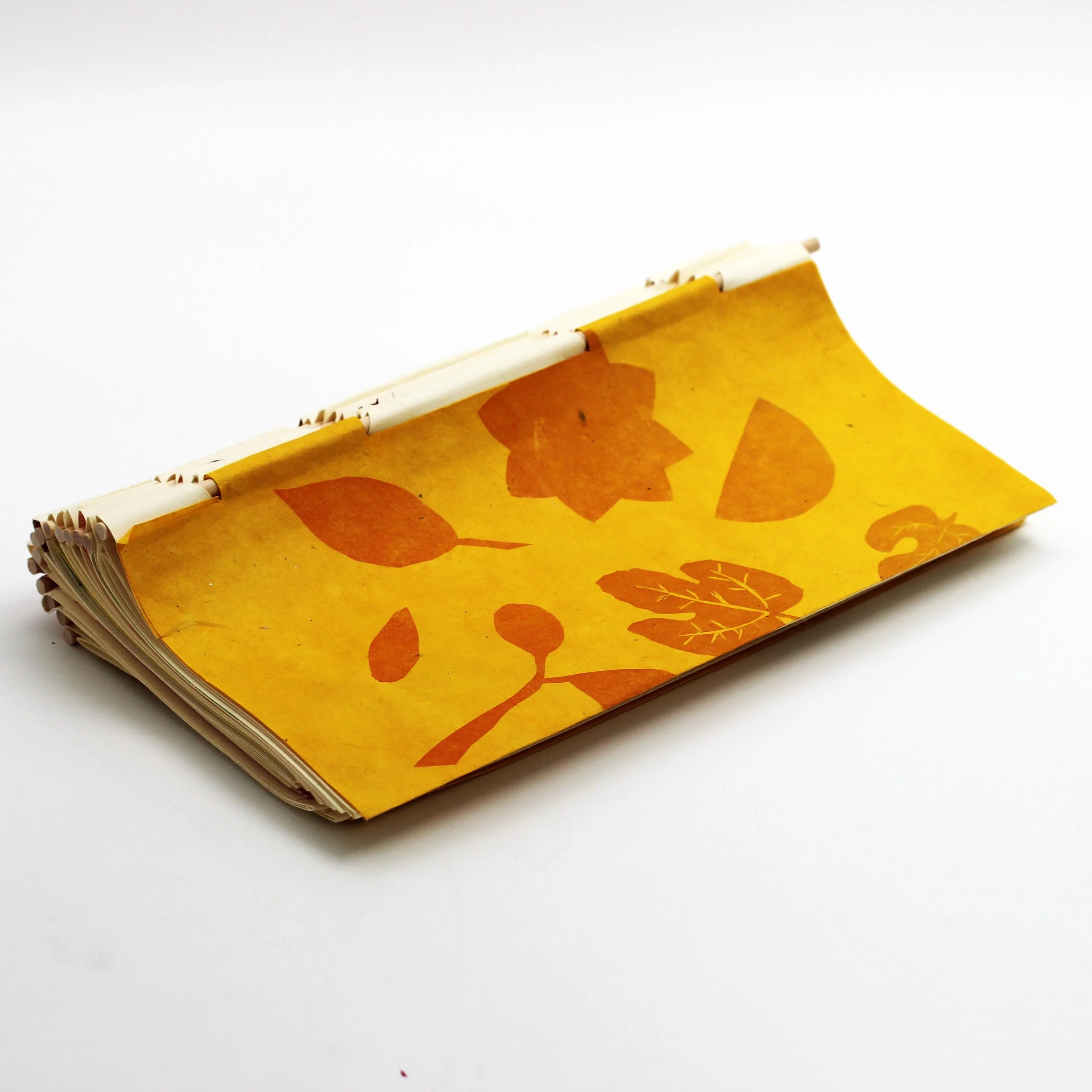
Handmade paper, screen print and digital print on mulberry paper, book board, book cloth. Made in November 2022. Edition of 5.
Dimensions: 32" x 5" x 8.5”
Peatlands cover more than 10% of Minnesota—the most of all the lower 48 states. Formed through centuries of accumulated organic matter, peatlands sequester around a third of the world’s soil carbon, though they make up only about three percent of the earth’s surface. Higher temperatures and drier conditions resulting from climate change threaten to disrupt this balance: the deep peat beds may begin to decompose, releasing centuries of stored carbon.
For this project, artist Leah Willemin worked with the SPRUCE experiment in Northern Minnesota. There, scientists investigate the effects of climate change on peatlands by raising temperatures and CO2 levels within enclosed areas of a bog. These enclosures represent potential futures: How might mosses, trees, bushes, fungi, and lichen all respond to higher temperatures? How will their relationships change? As my book unfolds, it depicts shifting arrangements and connections between members of the peatland ecosystem. Fully unfolded, the book takes the shape of the hexagonal enclosures at SPRUCE.
This work contemplates what it means to know a place and an ecosystem—into the future, or into the depth of the soil, or through slow observation and care. Each set of images in the book represents a way of sensing the peatland, drawing on research data generated at SPRUCE. Using LIDAR scan data, I created 3D paper sheets representing the bog surface. Some images are from below-ground robotic scans of tiny root systems and mycorrhizal fungal networks, and others from webcam shots of the bog. Willemin observed the bog through these programmatic captures before visiting to create a set of in-person sketches, which reflect her own sensing and movement through the site.
The 3D form of this book mimics the depth of a bog and invites the viewer to consider what is not seen, or what is hidden within. In a literal sense, the depth of water and peat that store carbon in a bog are not visible from the surface, but wetlands themselves are also often overlooked and poorly understood. The complex life they support is not always flashy, but instead demands quiet and close attention.
Handmade paper, screen print and digital print on mulberry paper, book board, book cloth. Made in November 2022. Edition of 5.
Dimensions: 32" x 5" x 8.5”

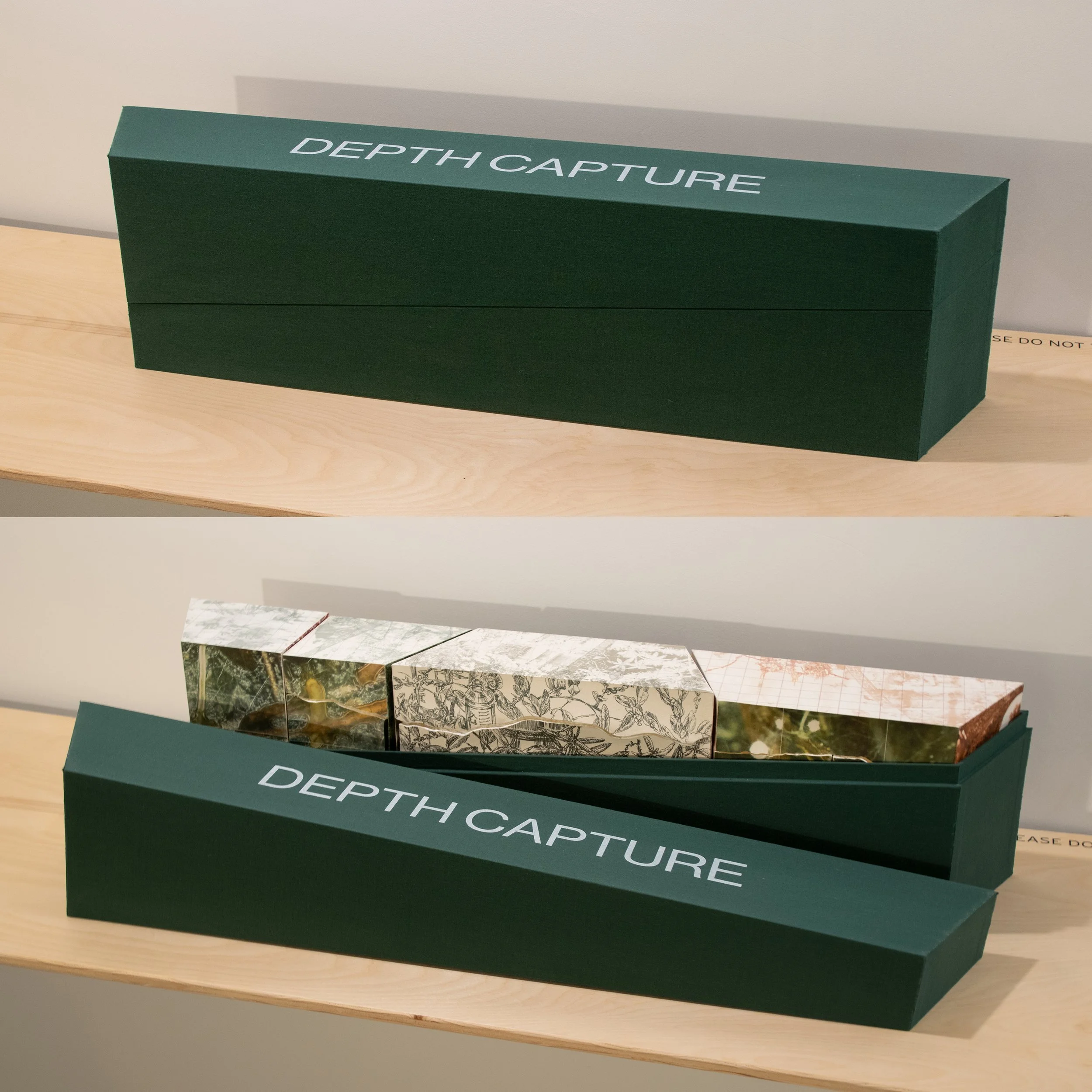 Image 1 of 9
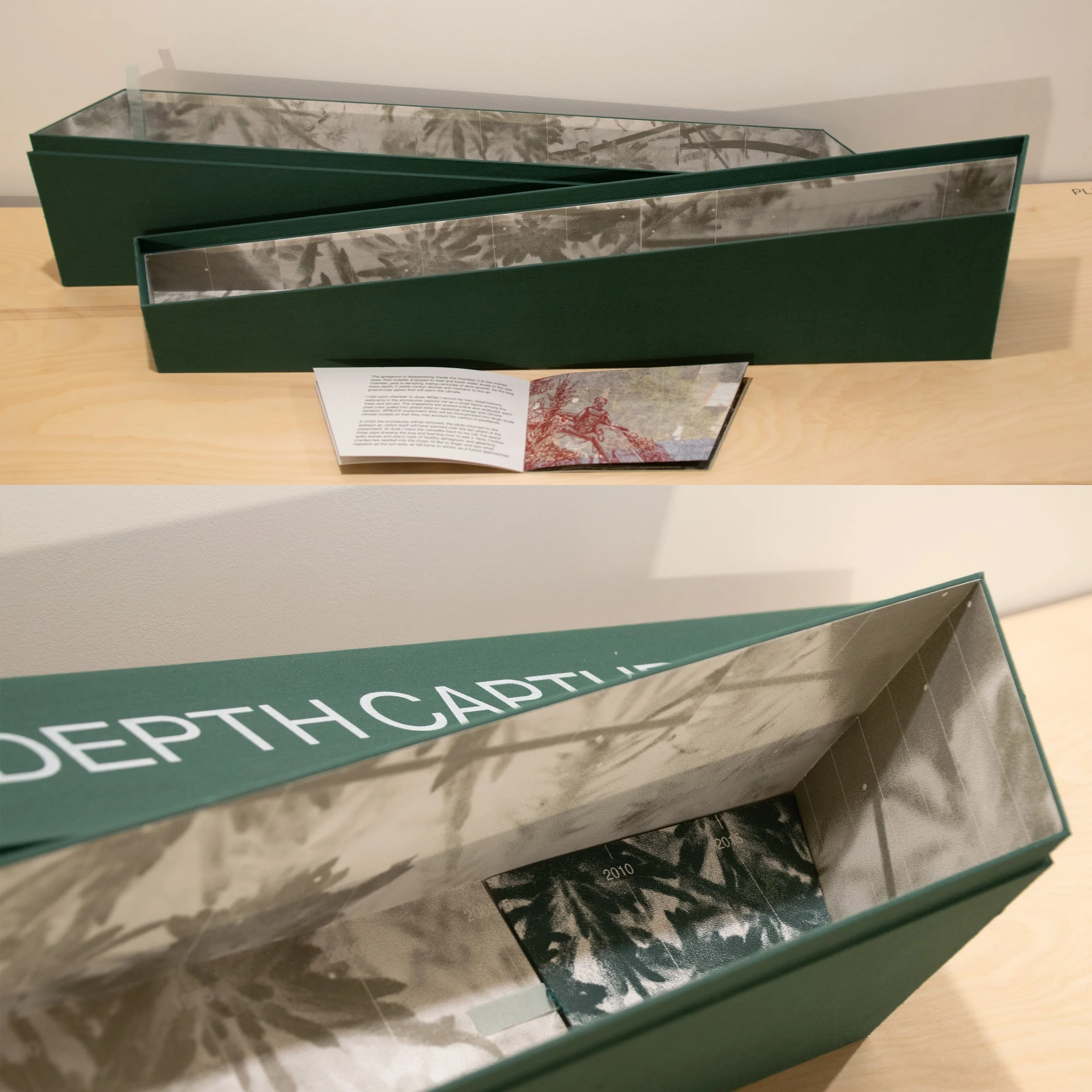 Image 2 of 9
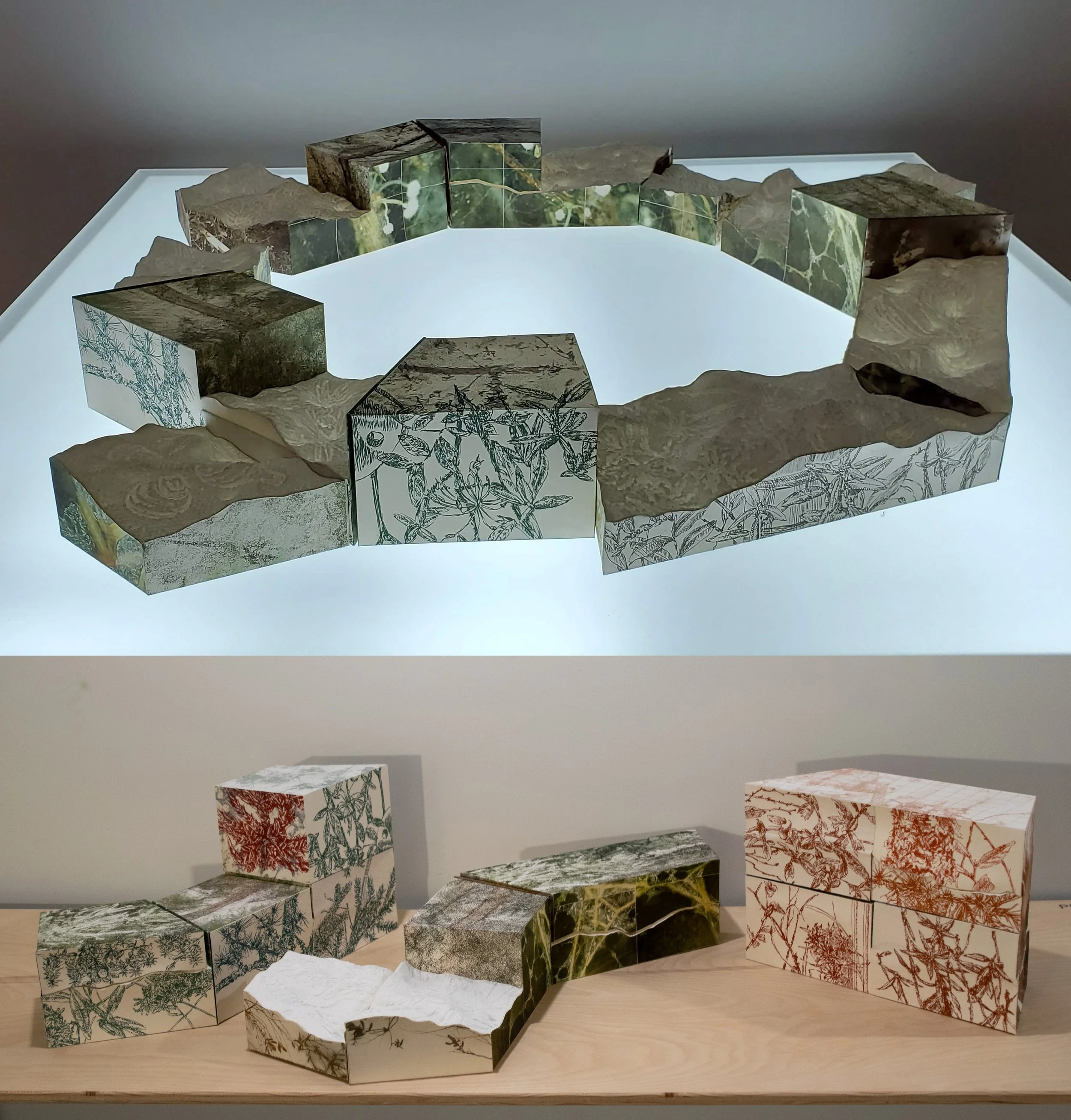 Image 3 of 9
 Image 4 of 9
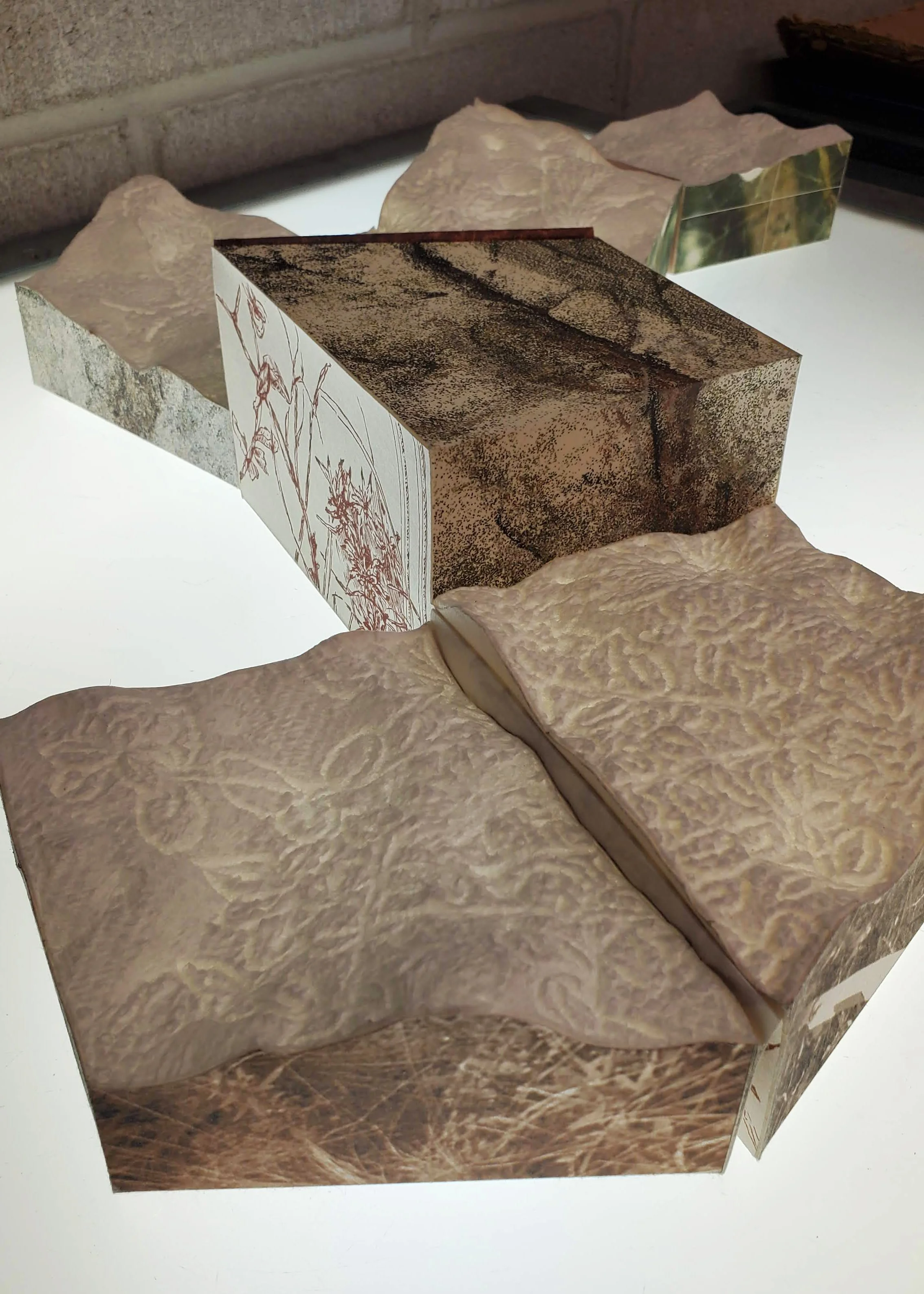 Image 5 of 9
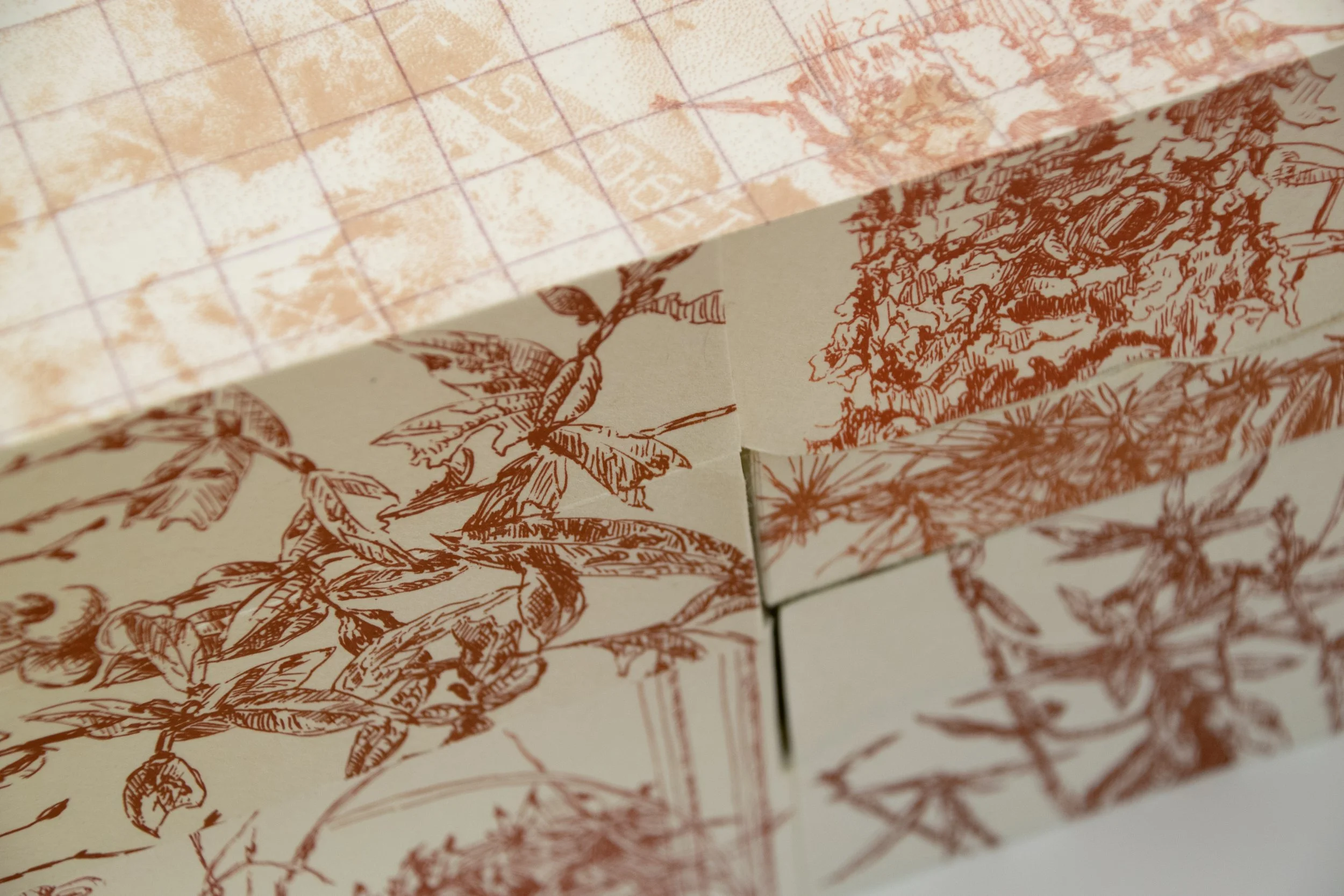 Image 6 of 9
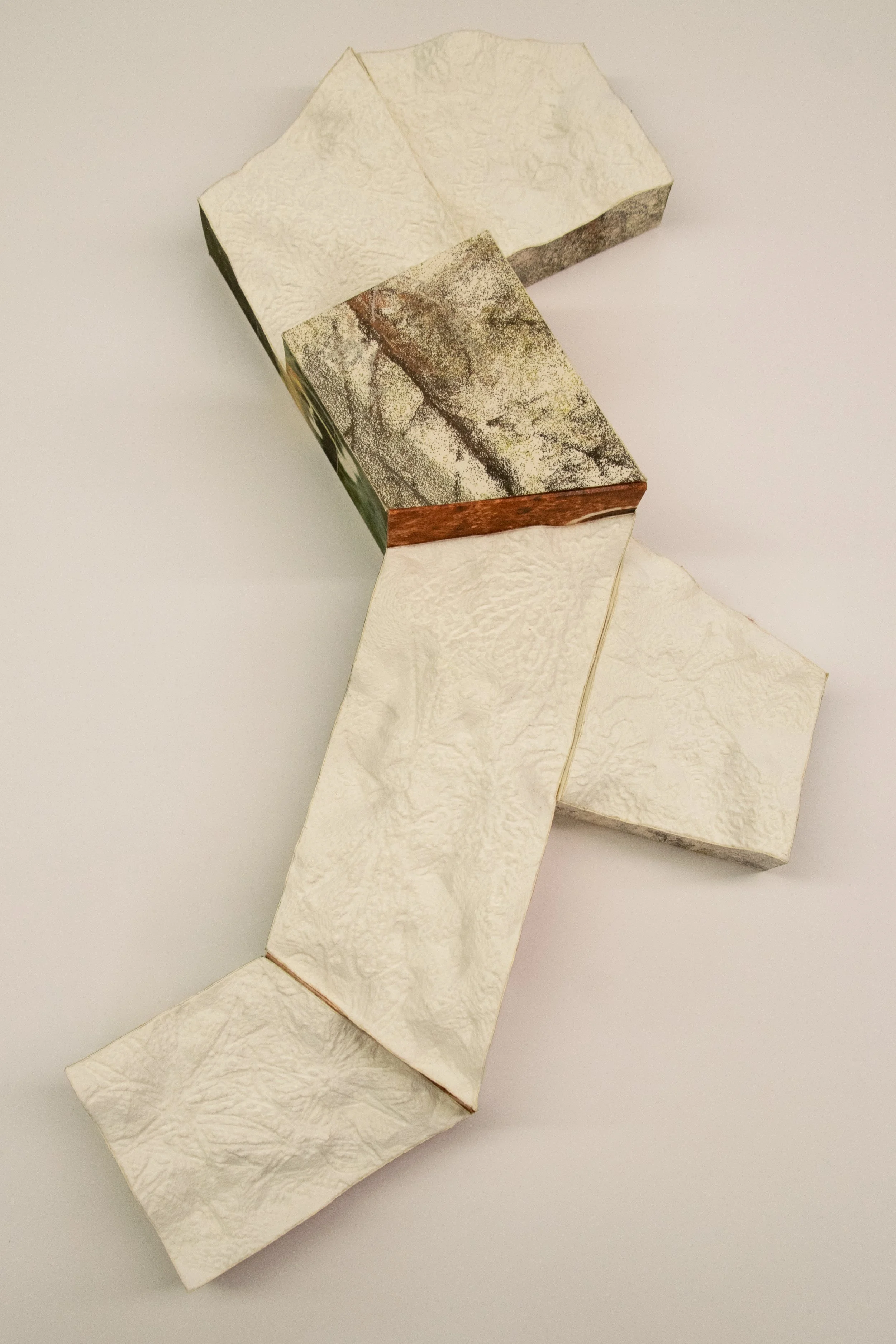 Image 7 of 9
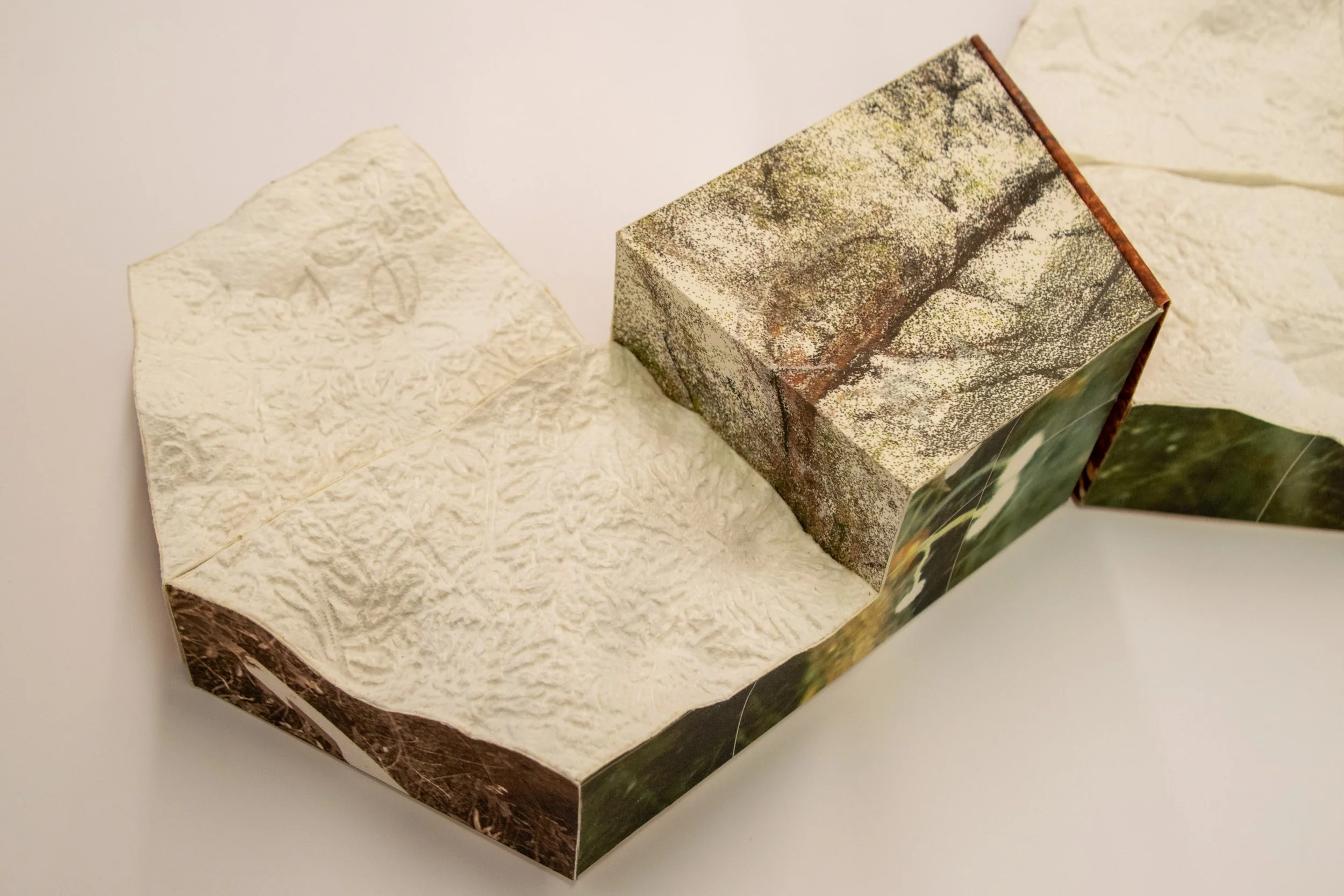 Image 8 of 9
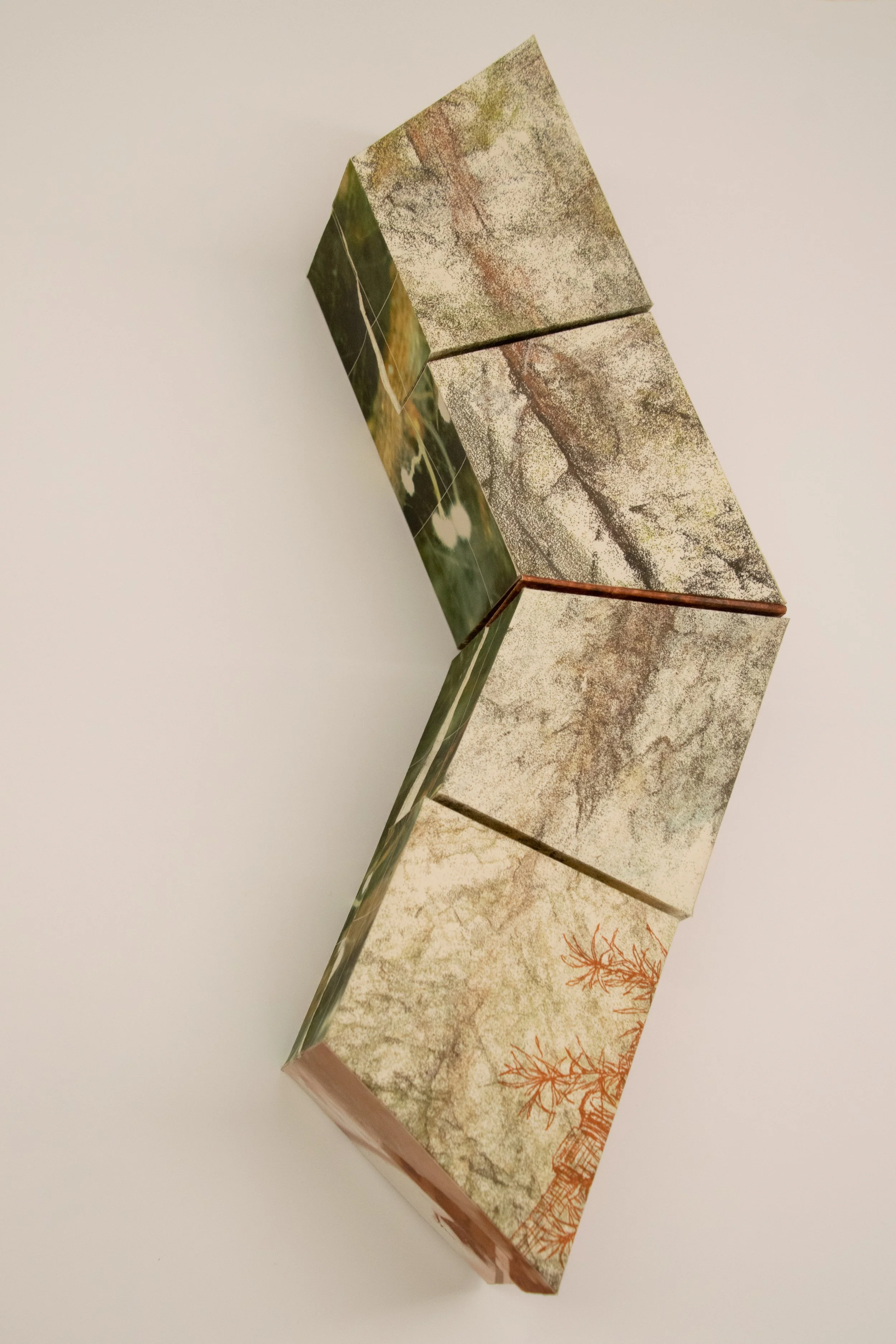 Image 9 of 9