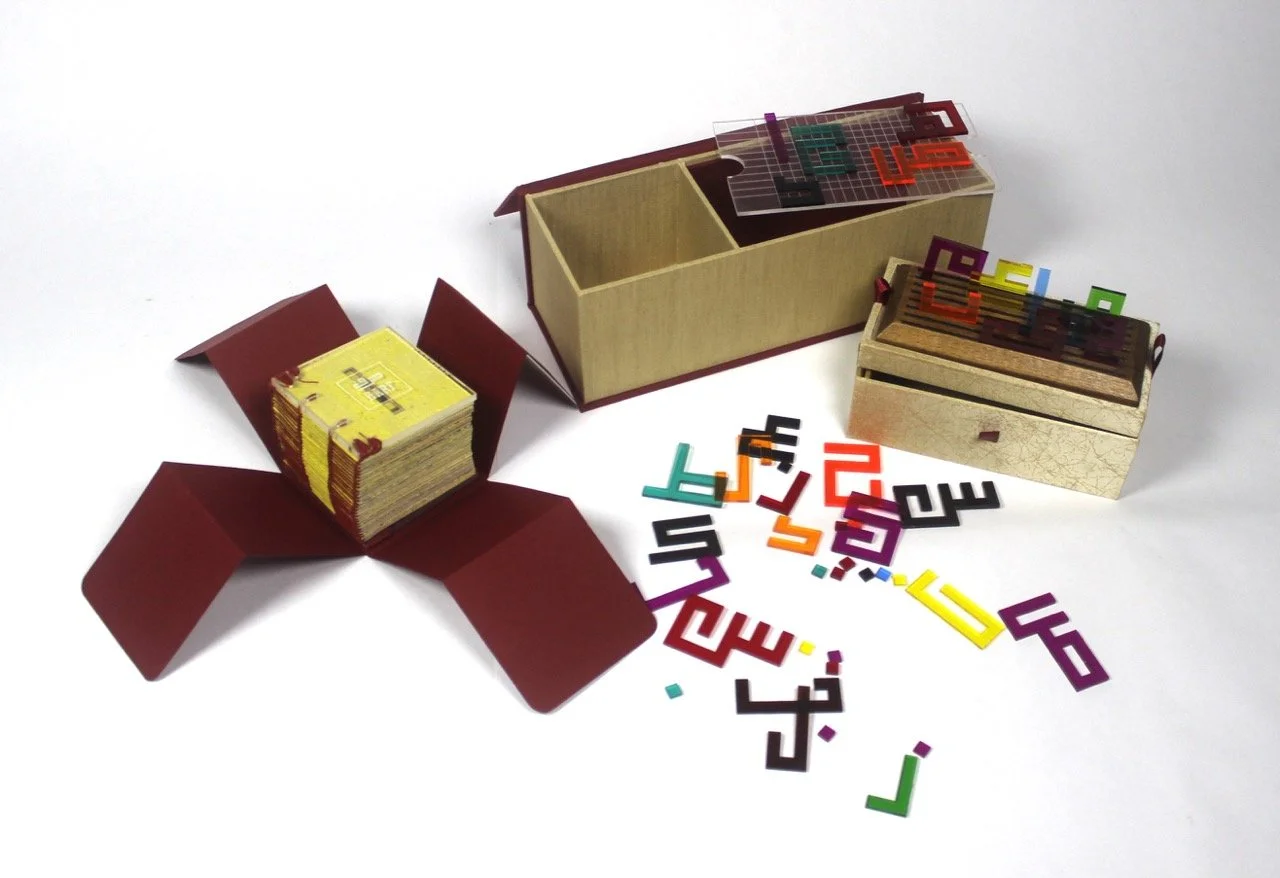
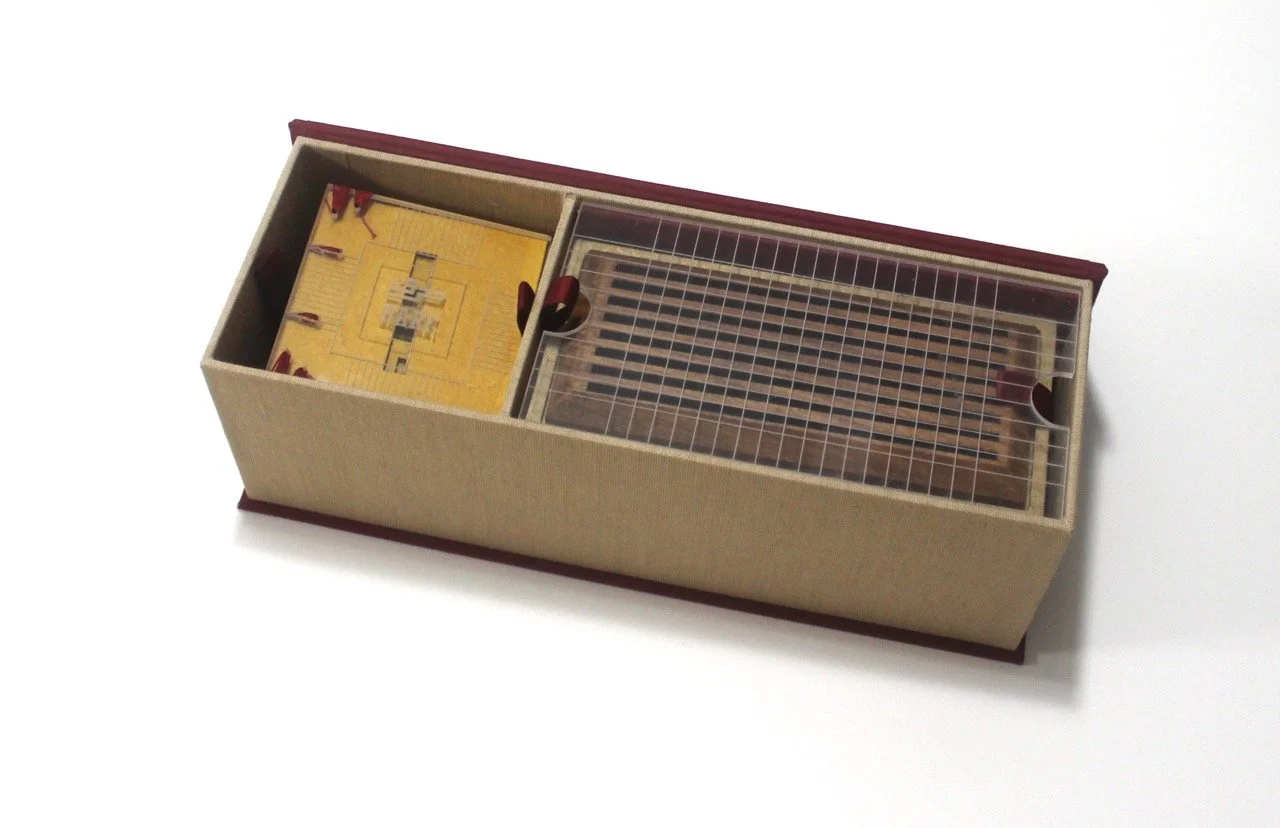
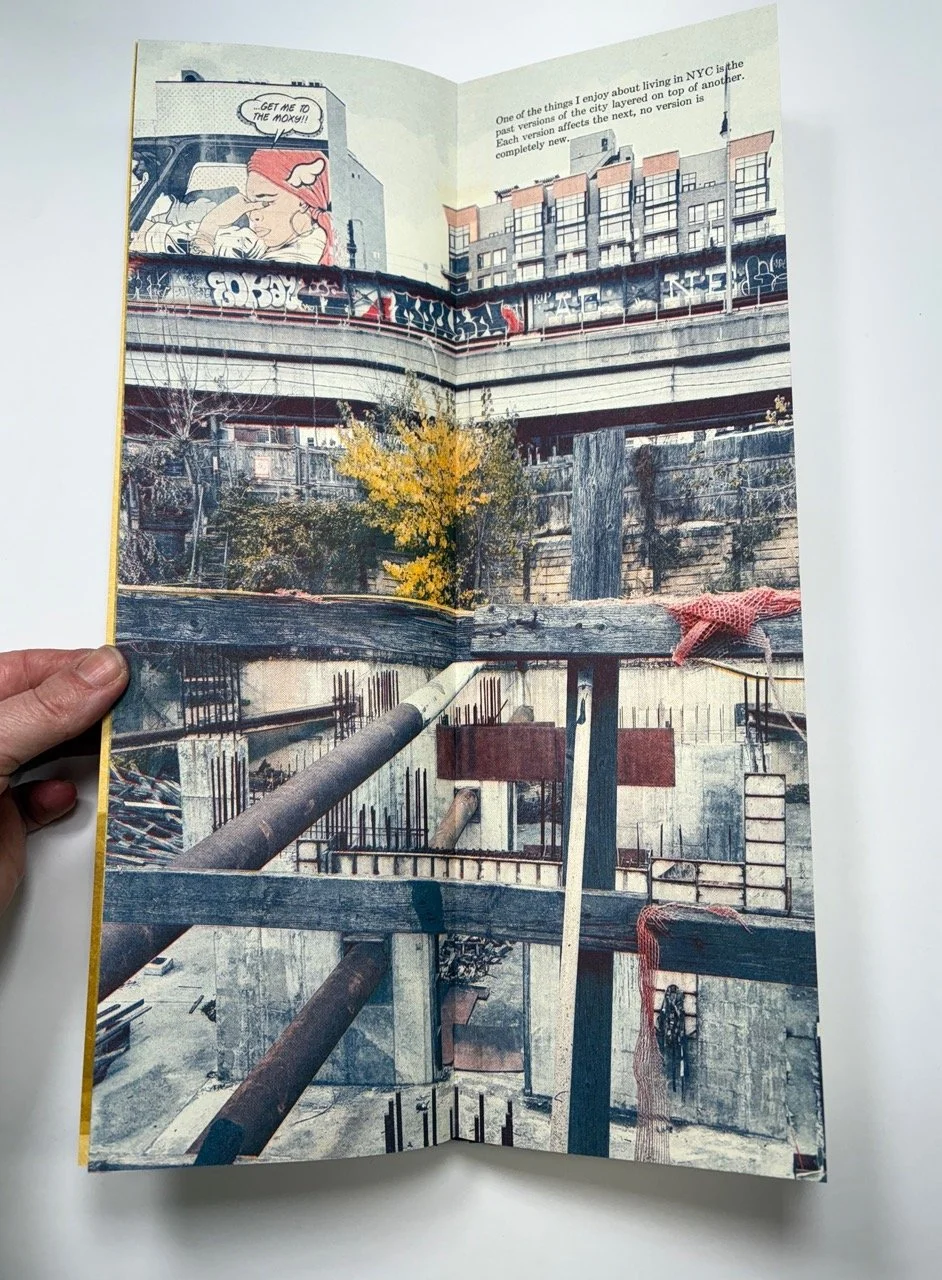
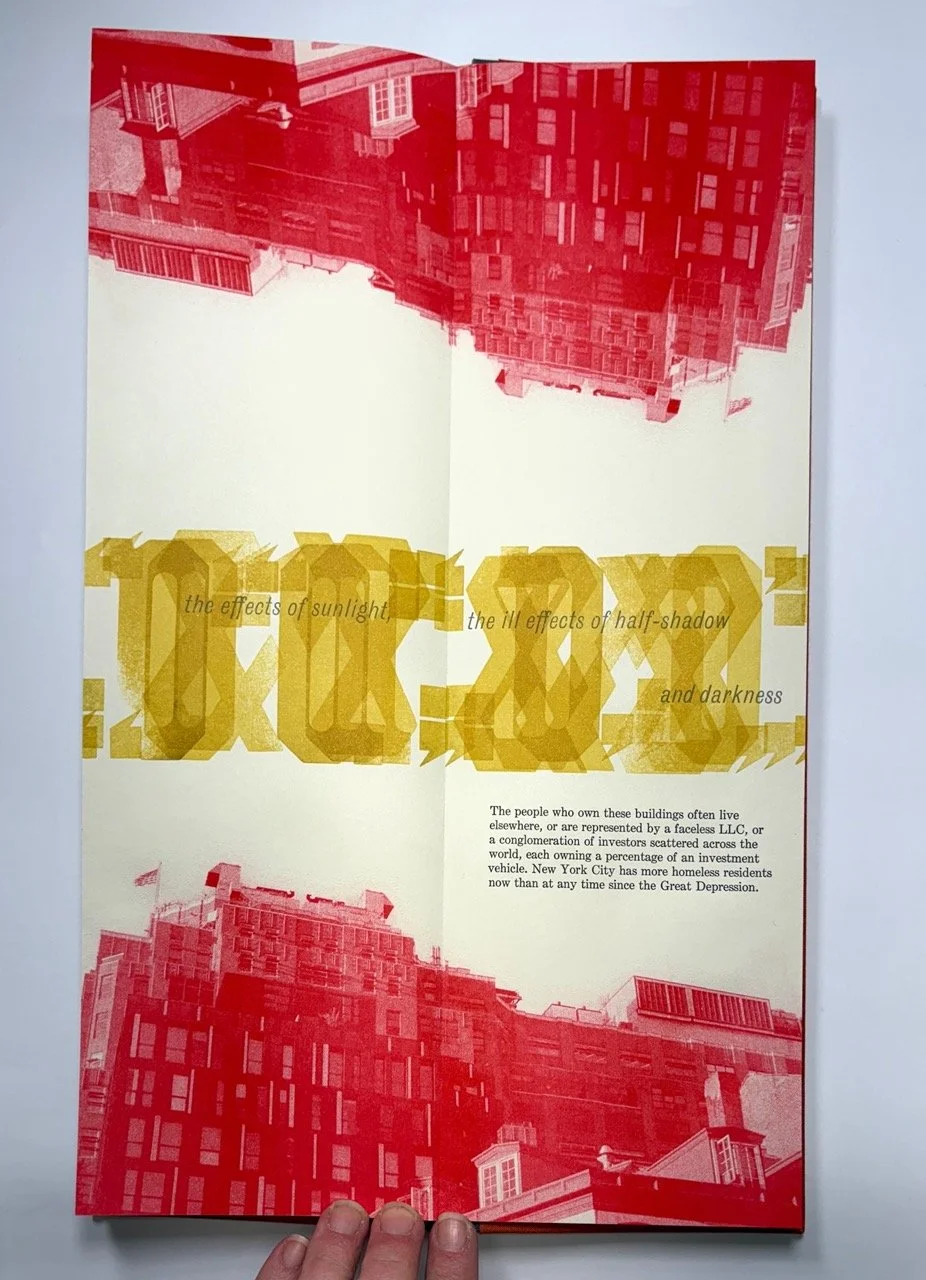
This piece is a semi-finalist for the 2026 MCBA Prize and on view in our gallery August 29 - November 29.
Depending on the number of copies available, orders containing this piece may not be fulfilled until early December 2026.
If placing an online order is not possible for your organization, please send a purchase order to aschiferl@mnbookarts.org and we will hold your items and follow up with an invoice. We request payment within 30 days of receipt.
"In her dystopian short story «不死のしま/ The Island of Eternal Life» (2012), Yoko Tawada describes a country beset by disasters and cut off from the outside world, one that is easily identified as Japan. The story takes place in 2023; the unnamed narrator, of Japanese origin, has been living in Berlin for a long time and is unsuccessfully trying to travel to his homeland. Following the triple disaster in 2011, the country in Tawada’s story met with further disasters and was consequently isolated from the outside world. Bereft of energy sources and any form of industry, the inhabitants live as they did in the Edo period; their lives are made even more difficult by a younger generation that is very weak, almost incapable of living. The elders, on the other hand, do not die but keep growing older, and they are forced to care for the sick children.
Since the Fukushima nuclear disaster, Yoko Tawada has been an outspoken opponent of nuclear power. In addition to «不死のしま/ The Island of Eternal Life, » she has published many works about the consequences of atomic pollution. She has also demonstrated remarkable foresight in predicting political events.
March 11, 2011, is the date when I began engaging with the text. I was living in Tokyo at the time, and I still remember what I did that day; the morning before the quake I had bought a few pocket calendars in Shibuya that appealed to me because of their odd covers (because the fiscal year, school year, university year, and often even new jobs start on April 1 in Japan, most pocket calendars start on that date).
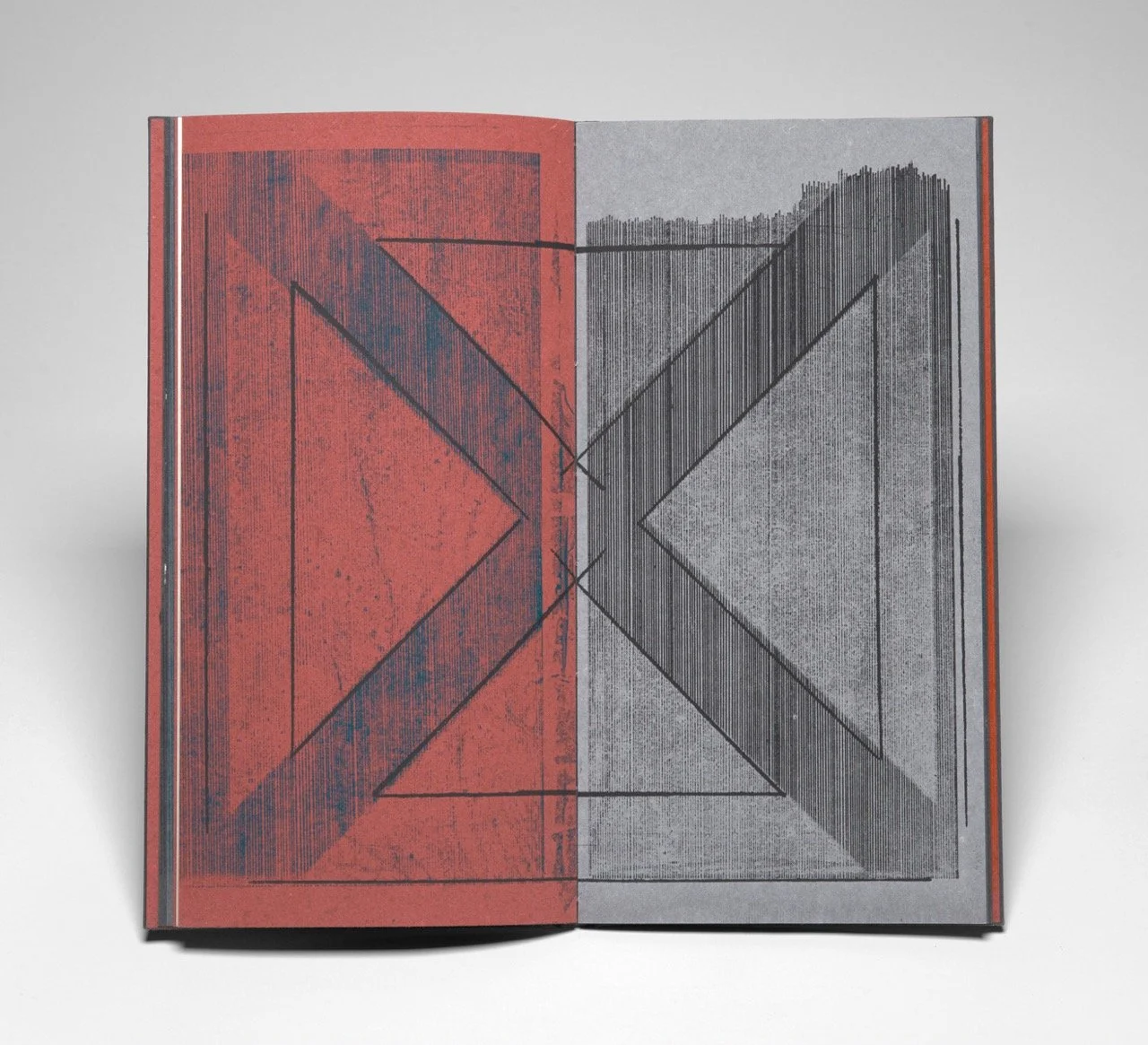
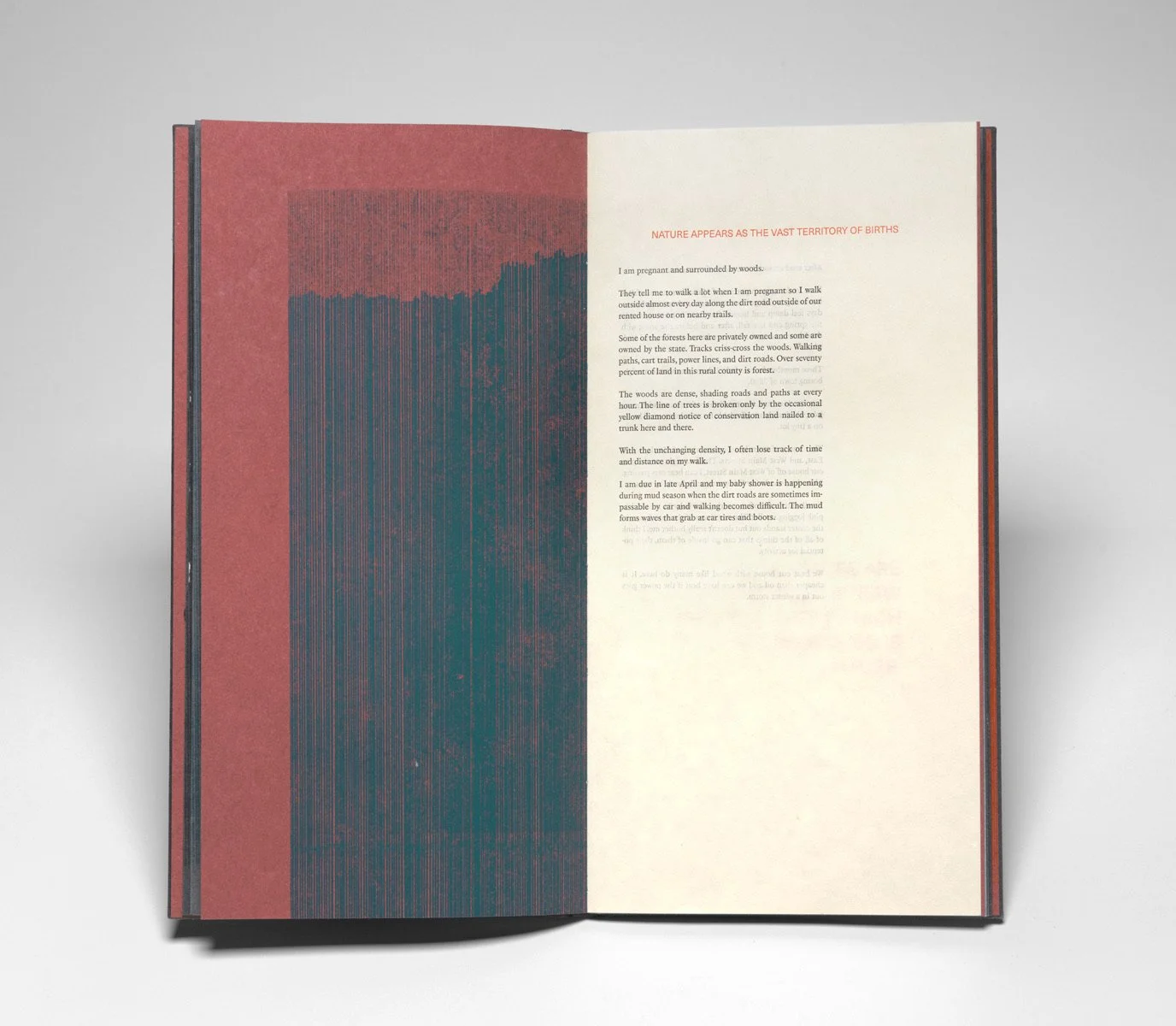
In the days that followed, there was a great deal of speculation and hardly any reliable news. Special newspaper editions handed out on the streets offered new information about the disaster, but their accuracy was often difficult to prove. Three photos from the special editions I collected during that time form the creative starting point for my book: an image of the Fukushima Dai-ichi nuclear power plant taken from a very great distance, a large column of smoke in Tokyo Bay, and a picture of an emergency shelter with people evacuated from a nursing home. The highly enlarged photos are offset-printed on thin paper; then I cut them up and overprinted the entire photo, making it almost unrecognizable.
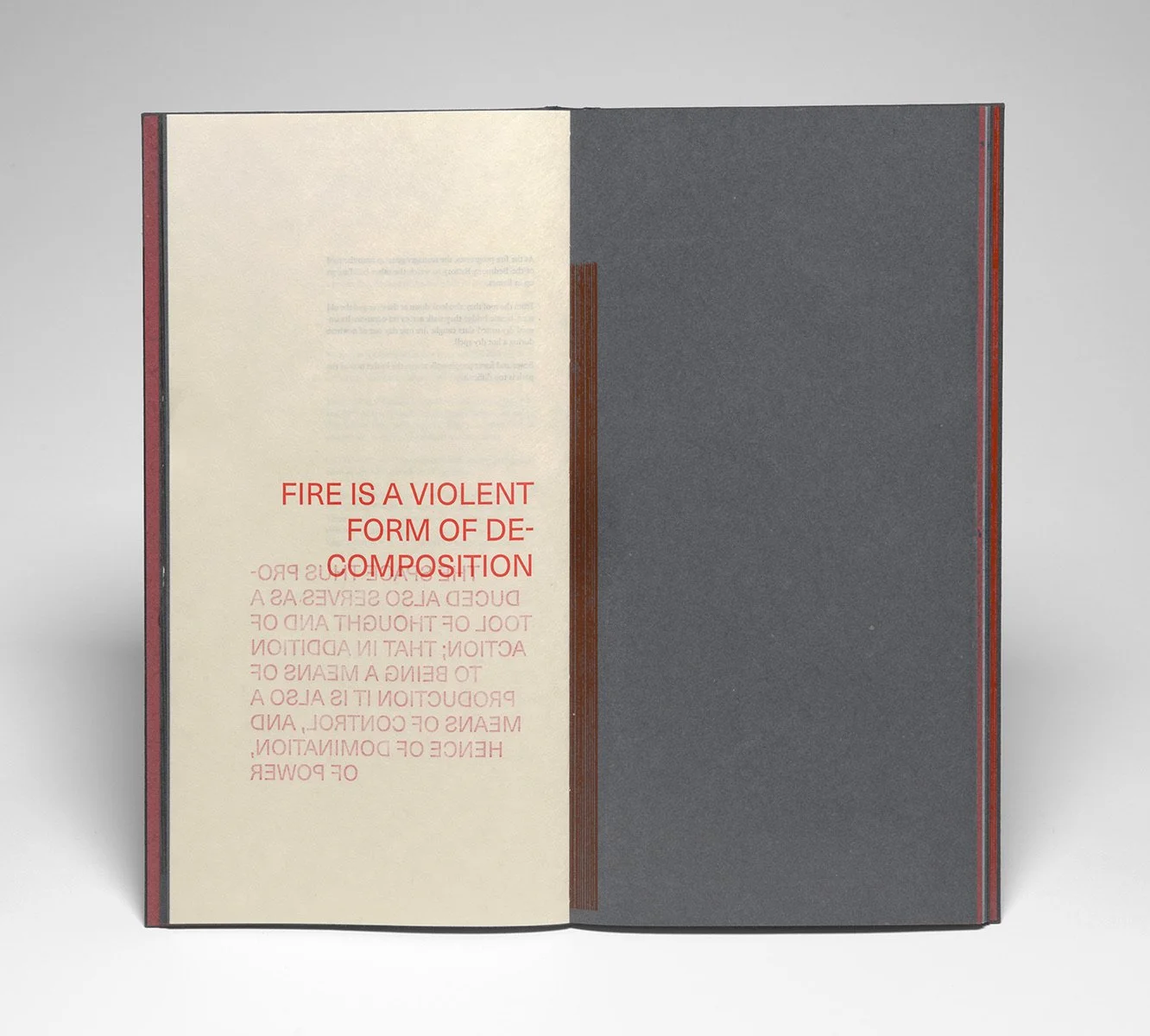
These prints are the basis for the book. The unprinted reverse of the emergency shelter page features Tawada’s text, in the Japanese original as well as the English translation. Both texts are printed in a bold silver font, shot through with small holes that increase page by page and eat up the letters, nearly dissolving them by the end. In addition, the overleaf photo of the emergency shelter is fully overprinted with a light-green fluorescent safety ink, which glows mysteriously in UV light.
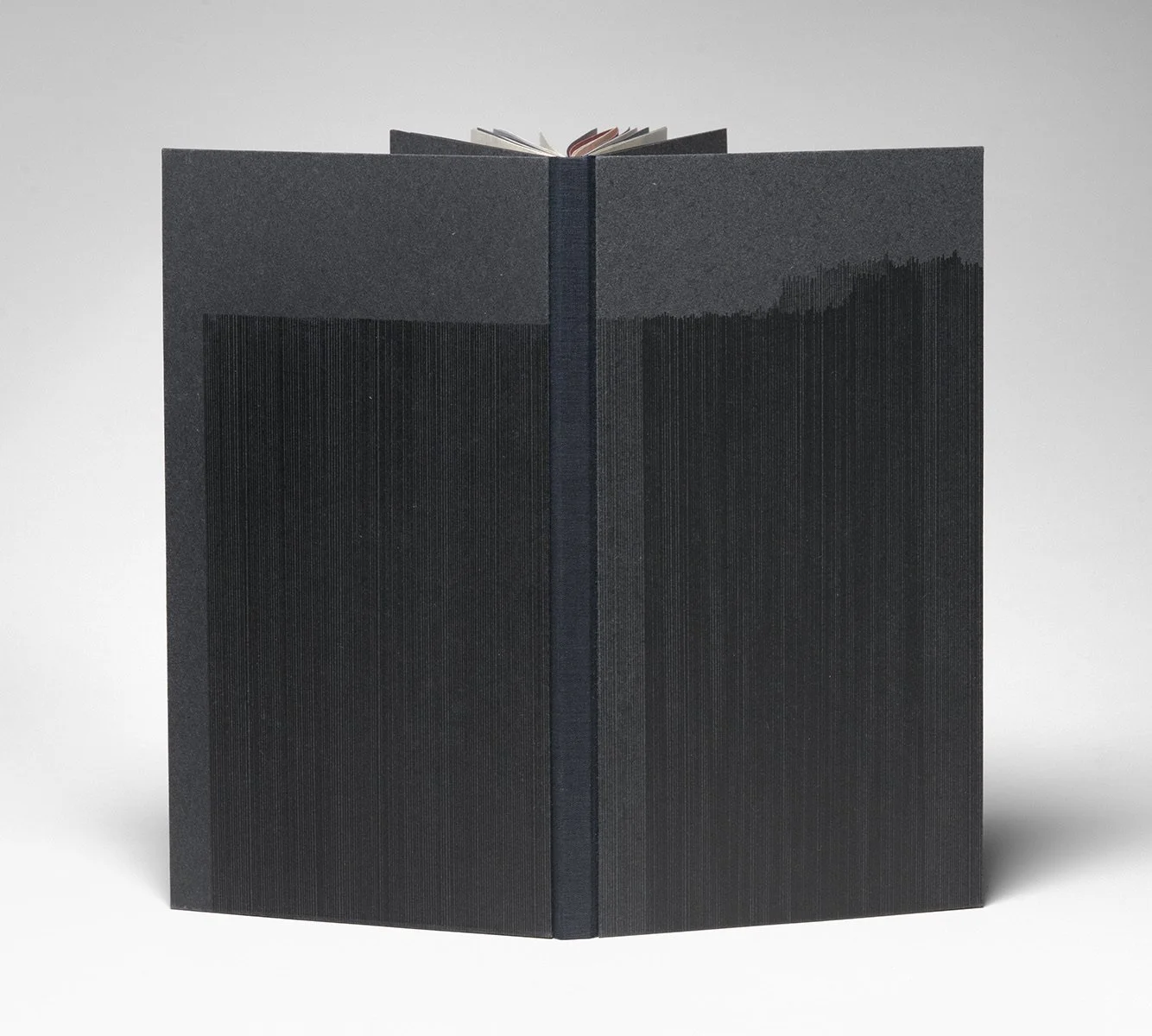
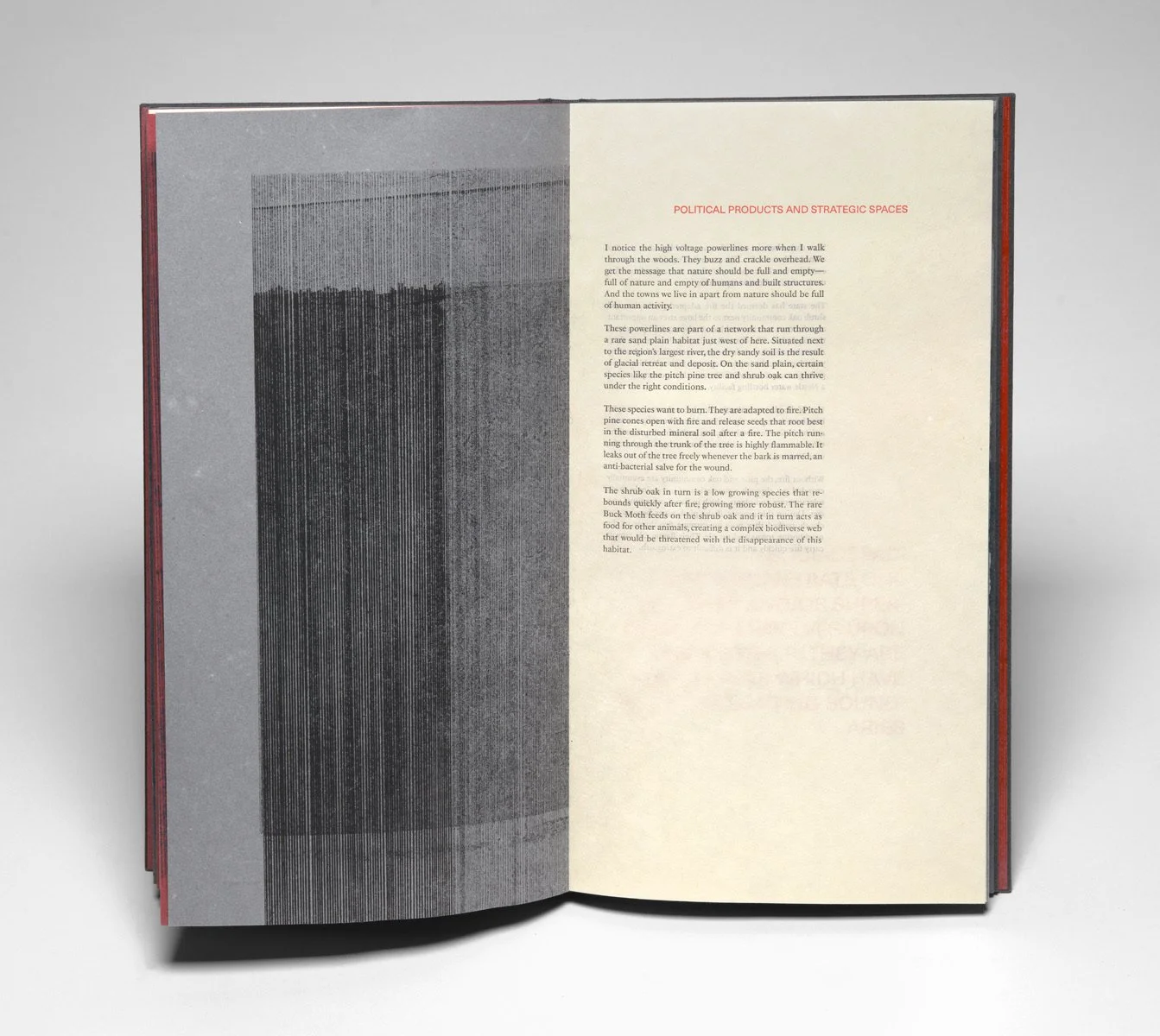
Each page of text alternates with a cut-out section of the other two photos, overprinted in gray, that also has the name of one of the twenty Japanese nuclear power plants printed on it in black. The opposite text page features the corresponding geodata, which becomes visible under the light of the UV lamp included with the book. The text page also glows slightly, playing with the association of radioactivity. The Japanese-folded book is held together by an acrylic spine; the semi-transparent cover is also printed in silver and the fluorescent safety color.
The book is wrapped in an aluminum-coated, fireproof «bousaizukin,» a pillow-like hood for children that is designed to protect them from injury in the event of an earthquake. These padded hoods are a standard disaster preparedness item, hanging from every elementary-school child’s chair. The pillow was created by three seamstresses whose kimono school was destroyed in March 2011, who then founded a cooperative to support women affected by the earthquake.
Eight of the books in the edition will also contain one of the abovementioned calendars, which have been revised, reprinted, and re-bound so that the days after March 11, 2011, are no longer visible. That is the date when Tawada’s dystopia begins and the normal chronology ends." —Veronika Schaepers
15.4" x 6.1" x 0.6" (book) 10" x 18" x 3.1"
*Consignment item. Not eligible for 10% membership discount. All consignment purchases are final and non-refundable once shipped.
This piece is a semi-finalist for the 2026 MCBA Prize and on view in our gallery August 29 - November 29.
Depending on the number of copies available, orders containing this piece may not be fulfilled until early December 2026.
If placing an online order is not possible for your organization, please send a purchase order to aschiferl@mnbookarts.org and we will hold your items and follow up with an invoice. We request payment within 30 days of receipt.
"In her dystopian short story «不死のしま/ The Island of Eternal Life» (2012), Yoko Tawada describes a country beset by disasters and cut off from the outside world, one that is easily identified as Japan. The story takes place in 2023; the unnamed narrator, of Japanese origin, has been living in Berlin for a long time and is unsuccessfully trying to travel to his homeland. Following the triple disaster in 2011, the country in Tawada’s story met with further disasters and was consequently isolated from the outside world. Bereft of energy sources and any form of industry, the inhabitants live as they did in the Edo period; their lives are made even more difficult by a younger generation that is very weak, almost incapable of living. The elders, on the other hand, do not die but keep growing older, and they are forced to care for the sick children.
Since the Fukushima nuclear disaster, Yoko Tawada has been an outspoken opponent of nuclear power. In addition to «不死のしま/ The Island of Eternal Life, » she has published many works about the consequences of atomic pollution. She has also demonstrated remarkable foresight in predicting political events.
March 11, 2011, is the date when I began engaging with the text. I was living in Tokyo at the time, and I still remember what I did that day; the morning before the quake I had bought a few pocket calendars in Shibuya that appealed to me because of their odd covers (because the fiscal year, school year, university year, and often even new jobs start on April 1 in Japan, most pocket calendars start on that date).
In the days that followed, there was a great deal of speculation and hardly any reliable news. Special newspaper editions handed out on the streets offered new information about the disaster, but their accuracy was often difficult to prove. Three photos from the special editions I collected during that time form the creative starting point for my book: an image of the Fukushima Dai-ichi nuclear power plant taken from a very great distance, a large column of smoke in Tokyo Bay, and a picture of an emergency shelter with people evacuated from a nursing home. The highly enlarged photos are offset-printed on thin paper; then I cut them up and overprinted the entire photo, making it almost unrecognizable.
These prints are the basis for the book. The unprinted reverse of the emergency shelter page features Tawada’s text, in the Japanese original as well as the English translation. Both texts are printed in a bold silver font, shot through with small holes that increase page by page and eat up the letters, nearly dissolving them by the end. In addition, the overleaf photo of the emergency shelter is fully overprinted with a light-green fluorescent safety ink, which glows mysteriously in UV light.
Each page of text alternates with a cut-out section of the other two photos, overprinted in gray, that also has the name of one of the twenty Japanese nuclear power plants printed on it in black. The opposite text page features the corresponding geodata, which becomes visible under the light of the UV lamp included with the book. The text page also glows slightly, playing with the association of radioactivity. The Japanese-folded book is held together by an acrylic spine; the semi-transparent cover is also printed in silver and the fluorescent safety color.
The book is wrapped in an aluminum-coated, fireproof «bousaizukin,» a pillow-like hood for children that is designed to protect them from injury in the event of an earthquake. These padded hoods are a standard disaster preparedness item, hanging from every elementary-school child’s chair. The pillow was created by three seamstresses whose kimono school was destroyed in March 2011, who then founded a cooperative to support women affected by the earthquake.
Eight of the books in the edition will also contain one of the abovementioned calendars, which have been revised, reprinted, and re-bound so that the days after March 11, 2011, are no longer visible. That is the date when Tawada’s dystopia begins and the normal chronology ends." —Veronika Schaepers
15.4" x 6.1" x 0.6" (book) 10" x 18" x 3.1"
*Consignment item. Not eligible for 10% membership discount. All consignment purchases are final and non-refundable once shipped.

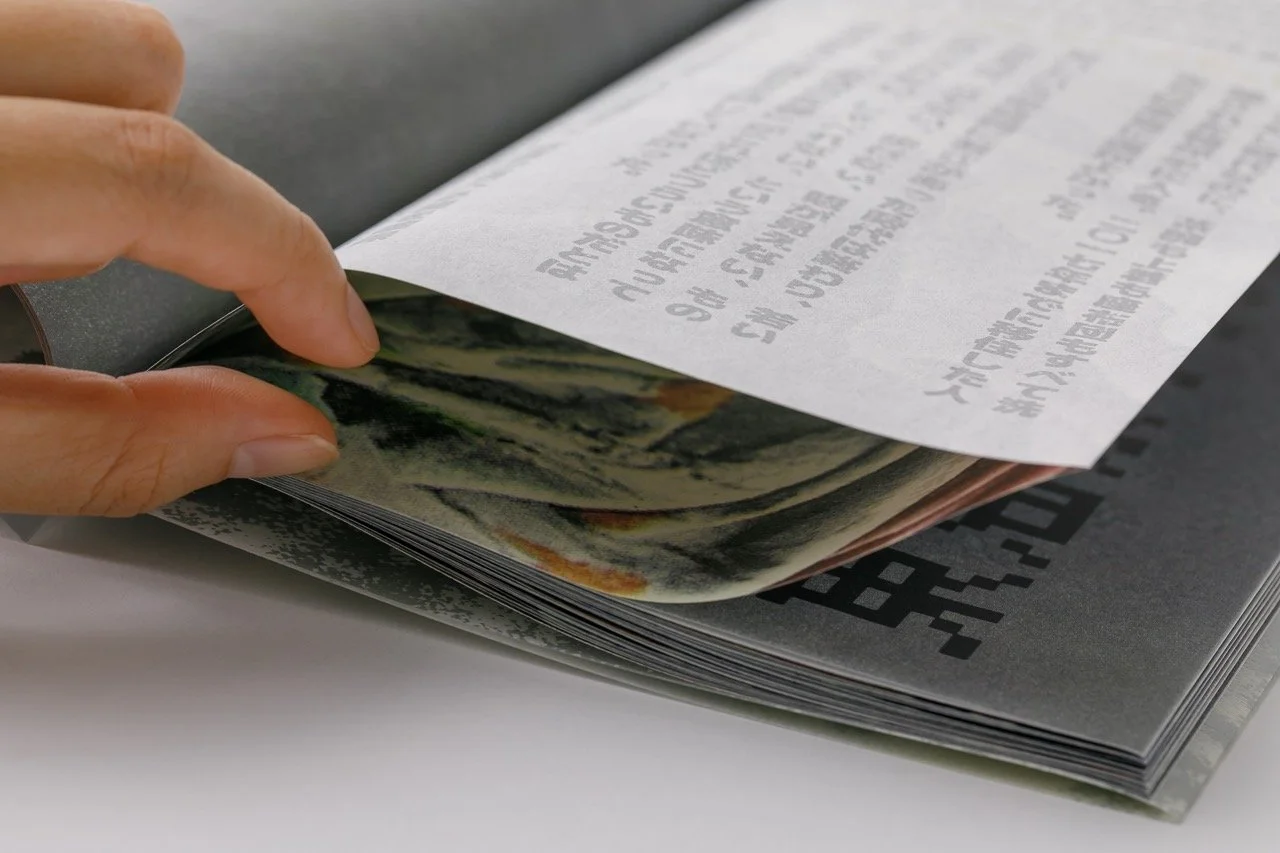 Image 1 of 5
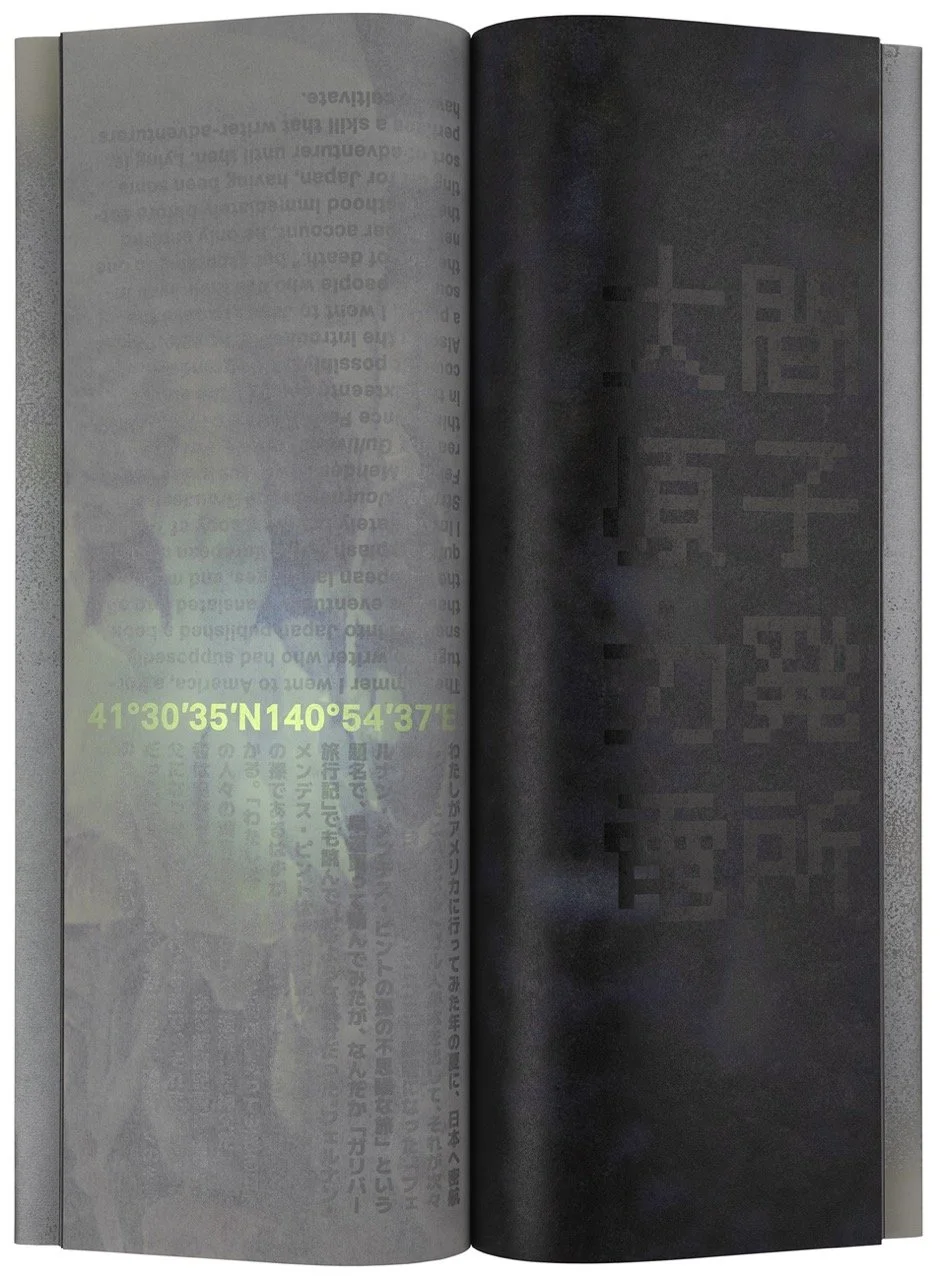 Image 2 of 5
 Image 3 of 5
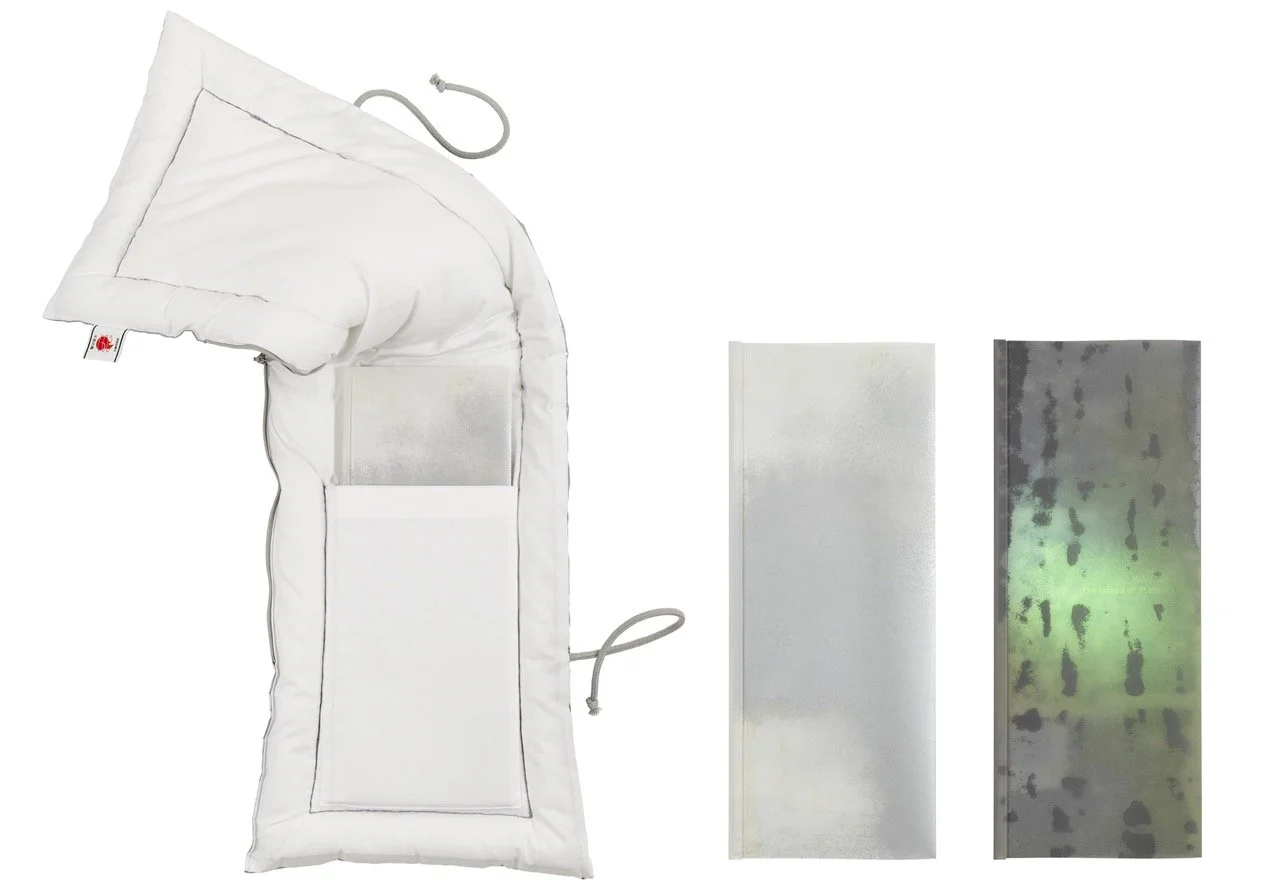 Image 4 of 5
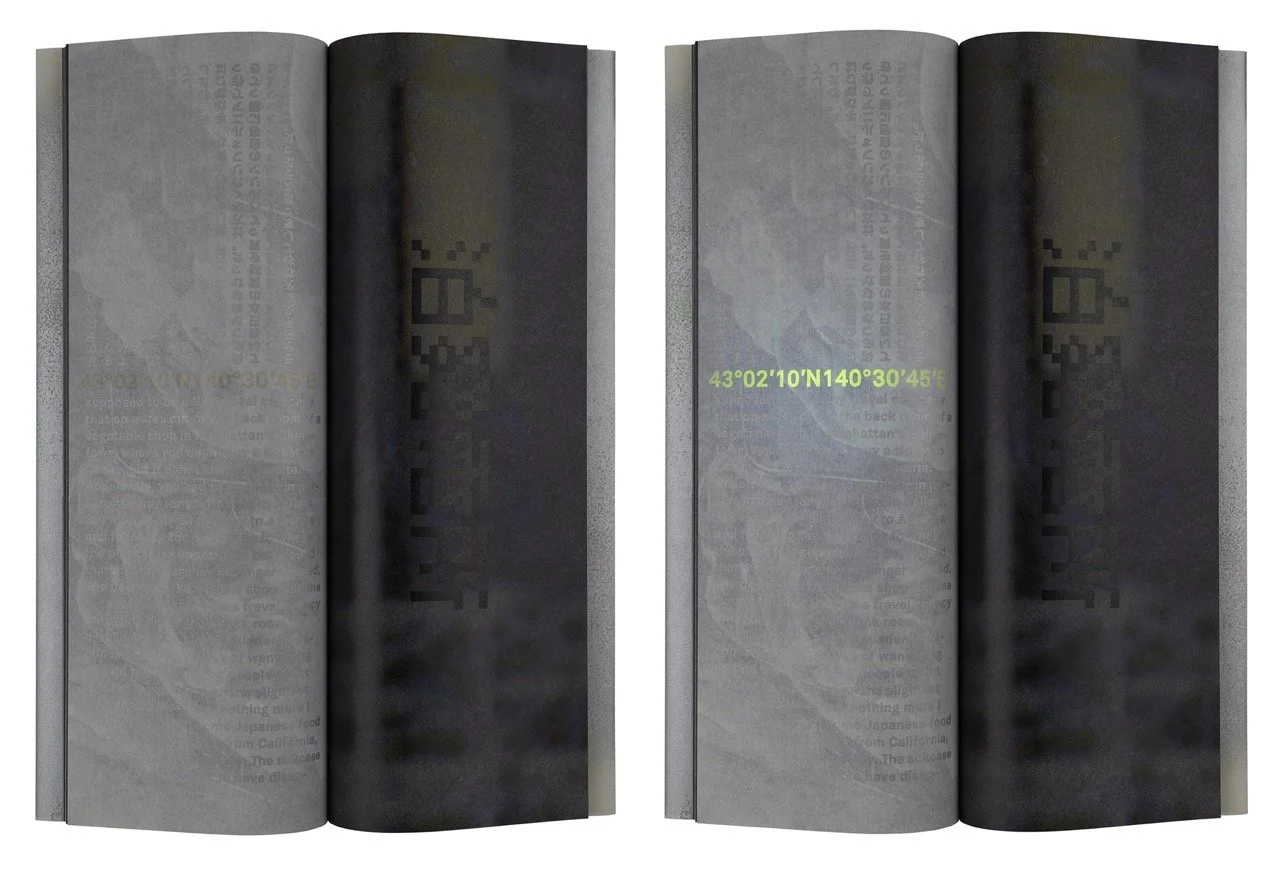 Image 5 of 5